Shipped today
All about FODMAP: Diet, Tips and Benefits
- By Bea Recuerdo (BSc)
- 25 Jun 2022
What are FODMAPs?
FODMAPs are a group of fermentable short-chain carbohydrates, a type of carbohydrate that is harder to digest in humans. FODMAP stands for:
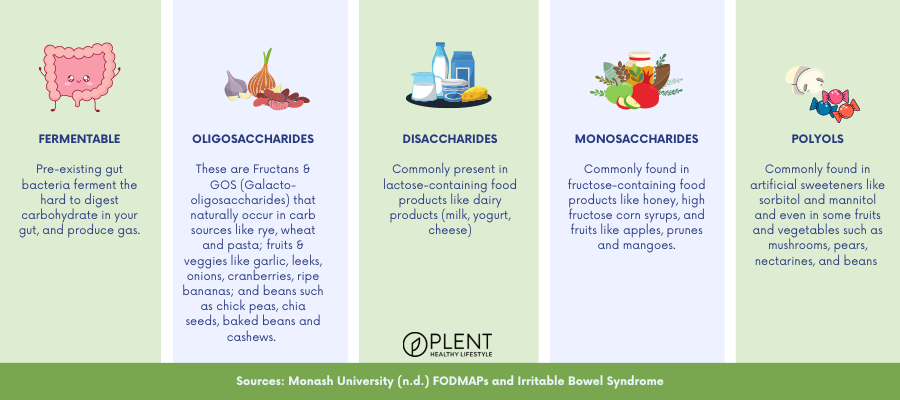
FODMAPs can be found in a variety of food products that people mostly eat. When FODMAPs are consumed, they slowly move through the small intestine and attract water.
Upon reaching the large intestine, these FODMAPs are used as a fuel source for gut bacteria and ferment these carbohydrates, and in return, producing gas as a result of the fermentation.
Naturally, this isn’t an issue, but it can be for people with IBS (irritable bowel syndrome). This is why a low-FODMAP diet can be considered.
Why do you need a low-FODMAP diet?
As mentioned earlier, this can be helpful for people who have IBS or SIBO. Since people with these gut problems often experience gas, abdominal discomfort, distention, bloating, fullness, nausea, and/or pain after eating foods containing FODMAPS (Source: UVA Nutrition)
Limiting the possible irritants in your diet, it helps restore your gut health lining and gut flora balance. Low-FODMAP diet can also help determine food products to avoid in the future to prevent gut irritation (Source: UVA Nutrition).
According to studies, a low-FODMAP diet can be part of the treatment for IBS where it can help people with up to 86 percent of their symptoms (Source: Hopkins Medicine).
What is a low-FODMAP diet?
A low-FODMAP diet limits the above-mentioned carbohydrates for a short period of time to help relieve unpleasant sensations and rest your digestive tract (Source: UVA Nutrition).
The diet can be challenging especially during the first, most restrictive phase. This is why it’s vital that you work with a doctor or dietitian that can help plan your low-FODMAP diet correctly. This is important to the success of your diet and being able to eat properly as well (Source: Hopkins Medicine).
A low-FODMAP diet can help you and your healthcare provider understand your IBS symptoms and in the long run, help improve your diet. In some cases, some people with IBS are not necessarily triggered by FODMAPs, for them, a low-FODMAP diet is not the therapy they need, and may have to consider other IBS therapies (Source: MONASH University)
How do you start a low-FODMAP diet?
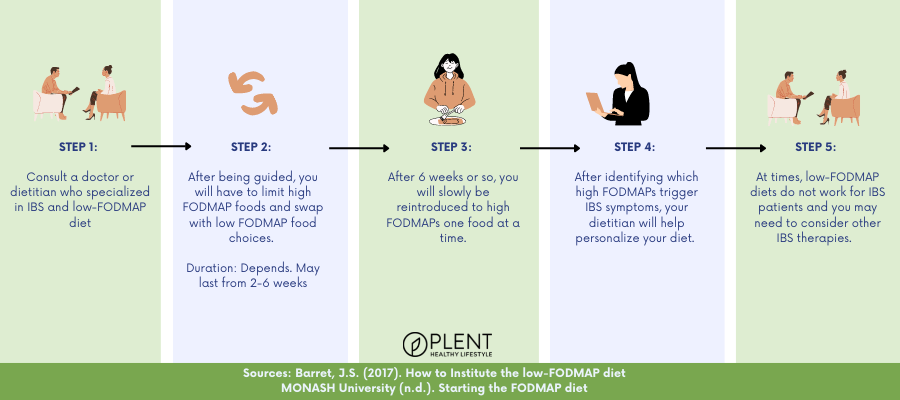
The illustration above shows how a low-FODMAP diet usually starts and works. This is not a “one-size-fits-all" method which is why it’s vital that you seek professional help from a dietitian or doctor whose specialization is the management of gastrointestinal disorders.
You can use the guide below from UVA nutrition as a reference for low-FODMAP foods:

FODMAP guide for Fruits
Serving size & suggestions
- ½ cup of cut fruit or a medium (baseball size) whole fruit.
- Limit to 1 to 2 servings per day.
- Fresh or fresh frozen fruit may be better tolerated than canned fruit.
- Tolerance may depend on the amount you eat at one time.
- Limit concentrated sources of fruit, such as dried fruit and fruit juices.
| FODMAP Food list for Fruits | ||
Low FODMAP | Moderate FODMAP | High FODMAP |
Bananas Blueberries Cantaloupe Grapefruit Grapes Honeydew Kiwi Lemons Limes Oranges Papaya Passion fruit Pineapple Raspberries Rhubarb Strawberries Tangelos
Note: Avoid eating large amounts of fruit. | Canned fruit | Apples Applesauce Avocados Blackberries Dried fruits (e.g., raisins, dates) Fruit juice Lychees Pear Persimmons Watermelons
Stone fruits: Apricots Cherries Mangos Nectarines Peaches Plums Prunes |
FODMAP guide for Vegetables
Serving size & suggestions
- ½ cup for most vegetables or 1 cup of leafy greens
- Limit to 1½ to 3 servings per day.
- Cooked vegetables may be tolerated best since cooking causes a loss of free sugars.
- Keep in mind tolerance may depend on the amount you eat at one time.
FODMAP Food list for Vegetables | ||
Low FODMAP | Moderate FODMAP | High FODMAP |
Bamboo shoots Bok choy Carrots Celery Chives Cucumber Eggplant Green beans Kale Lettuce Parsnips Pumpkin Radish Red bell pepper Spinach Squash Sweet Potato Turnip White Potato Zucchini | Corn Green Peas Tomatoes | Artichokes Asparagus Beets Broccoli Brussels sprouts Cabbage Cauliflower Fennel Garlic Green bell peppers Leeks Mushrooms Okra Onions Shallots Sweet corn Tomato paste |
The food groups below do not have a suggested serving size and suggestion as the serving size will depend on the meal plan that your dietitian will prepare.
FODMAP guide for Dairy
FODMAP Food list for Dairy | ||
Low FODMAP | Moderate FODMAP | High FODMAP |
Kefir Lactose-free milk Lactose-free cottage cheese Lactose-free yogurt Hard or aged cheeses Butter Cream Cream cheese | American Cheese
| Milk Yogurt Ice cream Cottage cheese Ricotta cheese
|
FODMAP guide for Grains
FODMAP Food list for Grains | ||
Low FODMAP | Moderate FODMAP | High FODMAP |
Quinoa Rice Millet Cornmeal Gluten-free products | Oats Buckwheat Sourdough white Bread
| Wheat Barley Rye
|
FODMAP guide for Legumes and nuts
FODMAP Food list for Legumes and nuts | ||
Low FODMAP | Moderate FODMAP | High FODMAP |
Firm and medium tofu Pumpkin seeds Sesame seeds Sunflower seeds | Canned and drained chickpeas Lentils Nuts and nut betters except pistachios and cashews Flax seeds
| Soy (silken tofu, textured vegetable protein, edamame, soy nuts, soy milk) Beans Chickpeas, hummus Lentils Pistachios Cashews |
FODMAP guide for Beverages
FODMAP Food list for Beverages | ||
Low FODMAP | Moderate FODMAP | High FODMAP |
Espresso Filtered coffee Green tea Peppermint tea Black tea | -
| Soft drinks that include high-fructose corn syrup or crystalline fructose; Apple juice Other fruit juices Apple cider Instant coffee Chamomile tea Fennel tea |
FODMAP guide for Sweeteners
FODMAP Food list for Sweeteners | ||
Low FODMAP | Moderate FODMAP | High FODMAP |
Granulated sugar Evaporated cane juice Brown sugar Brown rice syrup Pure maple syrup Corn syrup Sugar cane molasses Aspartame Saccharin Sucralose Stevia | Cocoa
| High-fructose corn syrup Crystalline Fructose Honey Agave Sugar beet Molasses
Sugar Alcohols: Sorbitol Xylitol Mannitol Maltitol |
(Source: UVA Nutrition)
Additional tips when starting a low-FODMAP diet:
- When grocery shopping, check the ingredients list for the sweeteners mentioned on the table.
- It is also important to avoid sugar and alcohol in the meantime. These are often found in products that are “diabetic-friendly” like beverages, ice creams, candies, and processed foods. Refer to the list above for the high FODMAP sugar alcohols.
- Check drinks for HFCS (high fructose corn syrup). It’s recommended that you drink less than 12 oz. of soda to avoid this.
- You may also need to double-check any medications for fructose and sorbitol. You can check this with your pharmacist.
(Source: UVA Nutrition)
How may digestive enzyme supplements support your FODMAP diet?
Digestive enzymes are a group of enzymes (such as lipases, lactase and cellulase) that help breakdown complex macronutrients such as carbohydrates, proteins, and fat. They also help in the absorption of these nutrients in the intestinal tract.
Studies on digestive enzyme supplements in people with IBS
Studies have shown that supplementing digestive enzymes in a diet can possibly help reduce the effects of FODMAP in people with IBS, by supplying the needed enzymes to facilitate digestion and absorption of high FODMAP foods (Source: Science Direct & NCBI)
Arthur Andrew FODMAP supplement
You can also consult your doctor or dietitian about the use of digestive enzymes. Arthur Andrew Medical curated a digestive enzyme and probiotic supplement specific for FODMAP problems. FODMAP DPE (Digestive Probiotics and Enzymes) is a blend of specialized enzymes and spore-forming probiotics that can help your body properly digest highly fermentable foods, commonly known as FODMAPs.
FODMAP DPE aims to help you control the occasional distress that comes with enjoying FODMAP-containing foods for those with sensitivities.
Remember: A low-FODMAP diet is not a permanent diet

A low-FODMAP diet is a very restrictive diet. It eliminates several food products and may affect your nutritional status if prolonged. Again, we advise that you always seek guidance from a professional to avoid malnourishment, or further disruption of your gut microflora.
Here are some additional references that you can look at:
A more extensive FODMAP list you can check
A 3-step FODMAP diet guide in treating IBS from MONASH University. They can also help partner you with a dietitian that specializes in IBS management.